
Welcome to Thrive Again Fitness
I'm a personal training instructor and the founder of Thrive Again Fitness — a coaching service created to support women who want to rebuild their confidence, reconnect with their bodies, and prioritise their wellbeing.
I specialise in working with women who may not yet have an established fitness routine but are motivated to make meaningful, sustainable changes at a gentle and realistic pace.
My approach focuses on improving fitness, posture, and everyday movement, while nurturing supportive lifestyle habits and a balanced, compassionate approach to nutrition.
Every programme is tailored individually so that each woman feels supported, capable, and ready to grow with confidence.
Lisa
Personal Training Instructor & Founder
My Services
- 🌿 1:1 Personal Training
- 🌿 Exercise Referral PT
- 🌿 Walk With Me
- 🌿 Lifestyle Coach
- 🌿 Gym Instructor
- 🌿 Rebuild Confidence Exercise Coaching
- 🌿 Fitness for Anxiety Support
- 🌿 Nutrition Guidance
- 🌿 Personal Goal Setting
Free Wellness & Movement Discovery Call
A relaxed, no-obligation conversation about your health, movement, and wellbeing.
You don’t need to be fit.
You don’t need to have everything figured out.
This free discovery call is simply a chance for us to talk about how you’re feeling in your body and what you’d like to improve.
Together we’ll explore ways to help you:
- 🌿 Move more comfortably
- 🌿 Reduce aches and pains
- 🌿 Increase energy levels
- 🌿 Build confidence
- 🌿 Improve overall health
- 🌿 Feel capable again in everyday life
Click on one of the links below to book your free Discovery Call
What Makes Thrive Again Fitness Different?
- 🌿 Gentle, sustainable fitness
- 🌿 Deep empathy and understanding
- 🌿 Confidence-focused training
- 🌿 Support for women managing anxiety
- 🌿 A welcoming space built exclusively for women
Pricing
- 🌿 1:1 Personal Training — £50 (60 minutes) Supportive, personalised sessions focused on your goals, lifestyle and fitness plan.
- 🌿 Walk With Me — £50 (50 minutes) A gentle, encouraging way to begin moving again and rebuild confidence, especially if you’re new to exercise or returning after illness.
- 🌿 When booking 10 sessions, receive a 10% discount, paying just £450. All sessions must be completed within 12 weeks of purchase to ensure consistent progress and the best results.
Certificate of Achievement
Active IQ Level 3 Diploma In Exercise Referral
Qualification Accreditation
In successfully achieving this qualification the learner has been awarded the following unit(s) and credit(s):
- Understanding Medical Conditions for Exercise Referral (R/503/7492) - 7 Credits at Level 4
- Anatomy and Physiology for Exercise and Health (A/600/9051) - 6 Credits at Level 3
- Applying the Principles of Nutrition to a Physical Activity Programme (L/600/9054) - 6 Credits at Level 3
- Professional Practice for Exercise Referral Instructors (Y/503/7493) - 2 Credits at Level 3
- Planning Exercise Referral Programmes with Patients (D/503/7494) - 8 Credits at Level 3
- Instructing Exercise with Referred Patients (L/503/7491) - 9 Credits at Level 3
Total: 7 Credits at Level 4, 31 Credits at Level 3
Active IQ Level 3 Diploma in Gym Instructing and Personal Training
Qualification Accreditation
In successfully achieving this qualification the learner has been awarded the following unit(s):
- Encouraging positive health and fitness behaviours in clients (Y/615/4016)
- Conducting client consultations to support positive behaviour change (A/616/7504)
- Health and safety in the fitness environment (M/616/7502)
- Understanding lifestyle, health, wellbeing and common medical (R/615/4015)
- Planning and instructing gym-based exercise (F/616/7505)
- Principles of anatomy, physiology and fitness (A/616/7499)
- Applied anatomy and physiology for exercise, health and fitness (F/615/4012)
- The principles of nutrition and their application to exercise and health (J/615/4013)
- Professionalism and customer care for fitness instructors (K/616/7501)
- Programme design and delivery for personal training (H/615/4018)
- Professionalism and business acumen for personal trainers (D/615/4020)
EFA TRAINING LTD
Emergency First Aid at Work (6hrs)
Has successfully completed training & assessment in accordance with current first aid practices and for the purposes of:
The Health & Safety (First Aid) Regulations 1981 and
The Health & Safety (First Aid) Regulations (Northern Ireland) 1982
31 July 2028
This certificate expires on the date shown above.
The First Aid Industry Body & the Health & Safety Executive strongly recommend Annual Refresher Training
The quality management system at FAIB holds 3rd Party Certification via a United Kingdom Accreditation Service (UKAS) Accredited Certification Body
Approved FAIB Centre No: 69/03(007)
Signed on behalf of Emergency First Aid Training Ltd
EFA TRAINING LTD
EMERGENCY FIRST AID TRAINING
About Me & Why I Love What I Do
As an Exercise Referral Personal Trainer, I specialise in creating calm, personalised programmes that prioritise safety, comfort, and long-term progress. Sessions are shaped around how you feel on the day, your medical history where relevant, and what matters most to you — whether that’s moving with less pain, building strength, improving energy, or simply feeling more capable in everyday life.
There’s no pressure to perform and no expectation to be “fit” before you begin. Some sessions focus on strength and movement, others on mobility, posture, or gentle conditioning. Progress is steady, realistic, and built around your life.
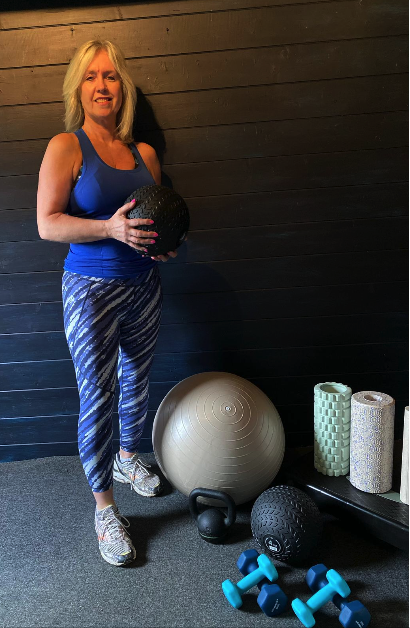
I work closely with each client to help them develop confidence in their bodies, create sustainable habits, and feel supported every step of the way.
If you’re looking for a thoughtful, wellbeing-focused approach to exercise, I’d love to help you get started.
Exercise Referral Personal Trainer
As a qualified Exercise Referral Personal Trainer, I design safe, evidence-based exercise programmes for individuals living with a wide range of health conditions. Every programme is tailored to the individual, guided by medical history, current symptoms, and—where appropriate—GP or consultant referral.
I work with clients who have, or are managing:
Cardiovascular & Metabolic Conditions
- Hypertension (high blood pressure)
- Hypercholesterolaemia (high cholesterol)
- Diabetes (Type 1 and Type 2)
- Obesity
Respiratory Conditions
- COPD (Chronic Obstructive Pulmonary Disease)
- Asthma
Musculoskeletal Conditions
- Osteoarthritis and Rheumatoid Arthritis
- Osteoporosis
- Low back pain
- Total joint replacement (e.g. hip or knee)
Mental Health & Wellbeing
- Depression (unipolar and bipolar)
- Anxiety
- Stress
Exercise programmes focus on improving physical function, confidence, and overall quality of life, while respecting medical limitations and promoting long-term health. Collaboration with healthcare professionals is welcomed to ensure the highest standard of care.
Anxiety, Stress, Depression & Mental Health
Anxiety, low mood, depression and ongoing stress can affect both how we feel emotionally and how we move through daily life. Gentle, regular movement can play a powerful role in supporting mental wellbeing — helping to calm the nervous system, lift mood, and reconnect you with your body in a positive way.
Exercise doesn’t need to be intense to be effective. Simple, supportive movement can help reduce feelings of tension, improve sleep, increase energy levels, and build a sense of confidence and control. Over time, this can make everyday life feel more manageable.
Training in a calm, welcoming environment allows you to move at your own pace, without pressure or judgement. Sessions are designed to feel safe and supportive, with space to breathe, slow down when needed, and gradually rebuild strength and confidence.
Whether you’re living with anxiety, depression, or stress — or simply feeling overwhelmed — personalised movement can be a gentle yet effective way to support your overall wellbeing.
Many clients notice benefits such as:
- Feeling calmer and more balanced
- Improved sleep quality
- Increased energy levels
- Reduced muscle tension and stiffness
- Greater confidence in everyday movement
- A stronger sense of control over their health
Weight Loss – Understanding Your Body
At its core, weight loss comes down to energy balance — using more energy than you take in. When this happens consistently, your body begins to use stored fat for fuel, breaking it down and releasing it mainly as carbon dioxide and water.
However, weight loss isn’t just about willpower.
Your body is designed to protect its energy stores. As you lose weight, it naturally responds by increasing hunger and slowing metabolism — a process known as metabolic adaptation. This is one reason why weight loss can feel harder over time.
Hormones and Appetite
Two key hormones influence hunger and fullness:
Leptin (satiety hormone)
Leptin is released by fat cells and tells your brain how much energy you have stored. As body fat decreases, leptin levels
fall, which can increase appetite. In many people with obesity, leptin levels are already high, but the brain becomes
resistant to its signal — making it harder to feel full.
Leptin also plays roles in fertility, bone health, and immune function.
Ghrelin (hunger hormone)
Ghrelin is produced mainly in the stomach and signals when it’s time to eat. Levels rise when you’re hungry and fall after
meals. During weight loss, ghrelin often increases, making hunger stronger.
Sleep, protein intake, and avoiding extreme dieting can help manage ghrelin levels and support appetite control.
Why Weight Loss Feels Challenging
Early weight loss often includes water loss from stored carbohydrates. True fat loss happens more slowly and requires consistency over time.
As weight decreases, changes occur in brain chemistry that can make food more tempting and overeating easier. Combined with hormonal shifts, this explains why maintaining weight loss can be difficult.
From an evolutionary perspective, our bodies are wired to prevent starvation — not support modern weight loss goals.
Supporting Sustainable Progress
Successful, long-term weight loss works best when it includes:
- Balanced nutrition with adequate protein, fibre, and healthy fats
- Regular movement and strength training
- Quality sleep and stress management
- Patience and consistency
Slow, steady progress is far more sustainable than restrictive dieting.
The most important step is finding an approach that fits your life, supports your wellbeing, and keeps you motivated. Sustainable change happens gradually — and with the right support, it becomes far more achievable.
Weight Loss Jabs – GLP-1
People are using a class of medication called GLP-1 receptor agonists. These drugs mimic a natural hormone called glucagon-like peptide 1, helping to regulate blood sugar, control appetite, and slow digestion.
GLP-1 Weight Loss Injections – My Professional Perspective
GLP-1 medications (often called “weight loss jabs”) were originally developed to help people manage type 2 diabetes. More recently, they have been widely promoted for weight loss in people without diabetes by suppressing appetite and increasing feelings of fullness.
While these injections can lead to short-term weight loss for some people, they do not teach sustainable habits, improve movement, or address the underlying lifestyle factors that support long-term health.
Short-Term Results vs Long-Term Health
Most people lose weight while taking GLP-1 medications because appetite is chemically reduced. However, research shows that when the injections are stopped, appetite hormones return to previous levels and weight is commonly regained — often quickly, and in some cases to a higher level than before treatment.
This highlights a key issue: the medication manages symptoms temporarily, but does not build the skills, behaviours, or physical resilience needed for lasting change.
Side Effects and Unknowns
Many people experience unpleasant side effects, particularly in the early stages or as doses increase. Commonly reported effects include:
- Nausea
- Vomiting
- Diarrhoea
- Constipation
- Bloating and abdominal discomfort
- Fatigue
Rapid weight loss from any method can also increase the risk of gallstones and digestive issues. As these medications are still relatively new for widespread weight loss use in people without diabetes, we do not yet have strong long-term data on their effects when taken for extended periods or repeatedly over a lifetime.
Why I Don’t Promote Weight Loss Jabs
As an Exercise Referral Personal Trainer, my focus is on long-term wellbeing — not short-term fixes.
I believe sustainable weight loss comes from:
- Balanced nutrition
- Regular movement and strength training
- Improved mobility and confidence in your body
- Better sleep and stress management
- Realistic, maintainable lifestyle habits
This approach may feel slower, but it builds strength, energy, resilience, and self-trust, and it continues to work long after any programme ends.
Weight loss injections may appear to offer a shortcut, but without lifestyle change they rarely provide lasting success.
My role is to help you feel stronger, move better, and create habits that support your health for life. If you’re looking for a calm, supportive, whole-person approach to weight management, I’d love to help you get started.
Why Muscle Matters – Weight Loss with Exercise and Diet
When most people say they want to “lose weight,” what they really mean is they want to “lose fat.” But not all weight loss is the same — without the right approach, you can lose muscle too.
Muscle isn’t just about looking strong. It’s key to staying healthy, especially as we get older:
- Boosts metabolism: Muscle burns more calories than fat, helping you maintain weight loss.
- Keeps you strong and mobile: Supports joints, balance, and everyday movements like walking, lifting, or climbing stairs.
- Protects bones: Strength training keeps bones healthy and reduces the risk of fractures.
- Improves energy and confidence: More muscle = more endurance, better posture, and feeling good in your body.
As we age, muscle naturally declines. That’s why combining balanced nutrition with strength training is essential. This approach not only helps you lose fat, but also preserves and builds muscle — keeping you strong, functional, and resilient for life.
In short: losing fat is important, but building muscle is what helps your body move well, feel strong, and stay healthy long-term.